-
Exedy Lightweight Flywheel K20 Weight: Does Lighter Always Win?
-
Exedy Stage 2 Clutch and Flywheel: What Are You Actually Getting?
-
FL500S Oil Filter: Why Spec Compatibility Matters More Than the Name
-
Fuel Injector Purpose: More Than Just 'Squirts Gas'
-
Dirty vs Clean Cabin Air Filter: Does It Really Matter?
-
Why Should You Care About Flywheel Balance More Than Weight?
I'm a quality/brand compliance manager at an automotive components company. I review roughly 1,200 components a year, and in Q1 2024 I rejected 6% of first deliveries because they didn't meet our prints. 'Close enough' doesn't survive contact with my dial indicator.
These are the questions I hear from buyers, technicians, and people building weekend cars. I've answered them the way I would on the shop floor: direct, specific, and with the quality checks that actually matter.
- Exedy lightweight flywheel K20 weight
- Exedy Stage 2 clutch and flywheel
- FL500S oil filter
- Fuel injector purpose
- Dirty vs clean cabin air filter
Let's work through them.
Exedy Lightweight Flywheel K20 Weight: Does Lighter Always Win?
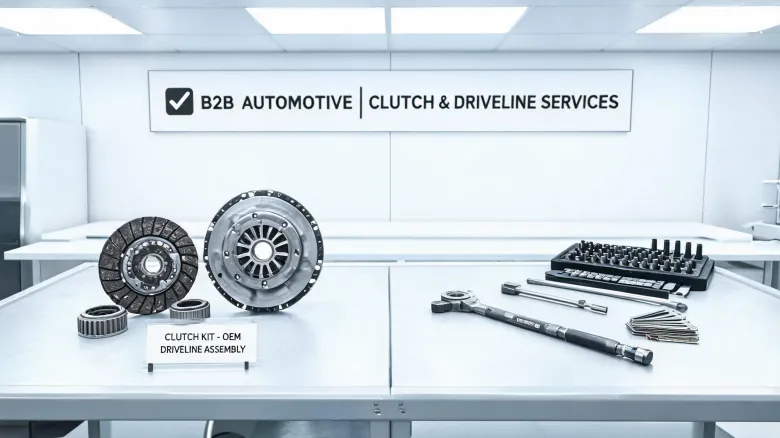
From the outside, a lightweight flywheel seems like a simple equation: less mass equals faster revs. The reality is that a flywheel is also a torsion damper and a clutch mating surface. Remove too much mass and you get quicker throttle response, sure, but you also make the car more likely to stall from a stop and less forgiving in traffic.
The Exedy lightweight flywheel K20 weight I usually see spec'd for Honda K20 platforms is around 8.5 to 9.5 pounds, depending on the exact part number. For reference, the factory flywheel I've weighed in audit checks sits around 18 pounds—18.2, if we're being precise on our scale. That's a significant drop, but the difference between 8.5 and 9.5 isn't what drivers feel. Balance is.
Our quality sheet for flywheels includes a runout check at the friction surface. We once rejected a batch (this was in Q1 2024) where runout exceeded our 0.05 mm limit by a small margin. On a balancer, it looked fine. On the car at 7,000 rpm, it would have felt like a vibrating phone.
So when you look up 'Exedy lightweight flywheel K20 weight,' don't stop at the number. Ask for the balance spec and the runout spec. If a vendor can't provide them, that's an answer too.
Exedy Stage 2 Clutch and Flywheel: What Are You Actually Getting?
Stage 2 is a term that means different things to different brands. In general, an Exedy Stage 2 clutch and flywheel kit is a step above a stock replacement: higher clamp load, a friction material that can handle more torque, and a flywheel that reduces rotating mass. It's not a full race setup. You can still drive it in traffic, but the pedal will be firmer and engagement will be quicker.
One thing I learned the hard way: communicate what 'streetable' means. I said 'streetable' to a friend once. He heard 'stock feel.' Result: a leg press every time he hit stop-and-go traffic. The parts weren't bad. The expectation was wrong.
When we receive a kit like this, we don't just check the part numbers. We check that the friction disc sits concentric to the flywheel's pilot bearing, that the pressure plate release fingers are even, and that the flywheel friction surface is within finish spec. Clutch kits fail early for many reasons; most of them are installation or spec verification issues, not the components themselves.
FL500S Oil Filter: Why Spec Compatibility Matters More Than the Name
The FL500S oil filter is a spin-on filter spec used on a range of Ford engines. You'll see aftermarket versions, store-brand versions, and no-name versions at the checkout. Some are fine. Some are not.
An oil filter has one main job: trap particles while allowing enough flow. The FL500S spec includes thread size, gasket diameter, flow rate, and bypass valve pressure. A filter with the right threads but the wrong bypass pressure can be a problem. On a cold start, if the bypass opens too early, unfiltered oil goes straight to the engine. If it opens too late, the engine can be starved for oil pressure.
We test oil filters on a flow bench—this is the unglamorous part of quality work. A filter that looks identical from the outside can fail internally. I saved about $4 on a no-name filter once. It worked fine for 3,000 miles, then the drain valve stuck and the filter couldn't be removed without a punch. Not ideal, but workable. Still a hard no going forward.
Short version: find the spec that matches your engine, buy quality, don't guess by thread size.
Fuel Injector Purpose: More Than Just 'Squirts Gas'
The fuel injector purpose is to deliver the right amount of fuel, at the right pressure, in the right spray pattern, at exactly the right moment. It's not a simple valve. The spray pattern creates atomization, which is what lets fuel burn fully. A good injector can make the difference between smooth idle and persistent misfire codes.
Three things to watch: flow rate, spray pattern, and response time. Flow rate tells you how much fuel it can deliver. Spray pattern tells you if it's atomizing properly. Response time tells you if it's keeping up with the engine's demand.
Dirty injectors show up slowly. Slightly rough start, then a cold stumble, then a check engine light with a fuel trims code. People assume it's the spark plugs. Sometimes it is. But if you keep replacing plugs and the idle stays rough, look at the injectors.
That said, I'm not the 'injectors are always the problem' guy. The fuel injector purpose is precise fuel delivery, and when it's off, the symptoms are usually caused by something else: fuel pressure, wiring, or contaminated fuel. Do the diagnosis before buying parts.
Dirty vs Clean Cabin Air Filter: Does It Really Matter?
Yes, but not for engine performance. A cabin air filter affects what you breathe and how hard the HVAC blower has to work. The dirty vs clean cabin air filter comparison comes up because most people never see the filter until a tech pulls it out, at which point it looks like a vacuum cleaner bag from a carpet store.
A clean filter lets air pass with low resistance. A dirty filter forces the blower motor to work harder, reduces airflow through the vents, and can make windshield defogging slower in humid weather. It doesn't make your car slower, but it makes the cabin less comfortable and can shorten blower motor life.
One misconception: 'dirty cabin filter equals bad smell.' That's sometimes true, but a filter can be loaded with particles and not smell at all. The only reliable way to know is to inspect it or measure airflow at the vent. In our facility, we run a simple pressure-drop test on filter media. The difference between a clean and fully loaded cabin air filter is measurable in inches of water column, and you can feel it in the airstream.
Why Should You Care About Flywheel Balance More Than Weight?
This is the question people don't ask, but they should. I've seen builds where the owner obsesses over 0.5 pounds of flywheel weight and then installs a clutch that was machined with burrs on the pressure plate fingers.
Flywheel balance and runout affect clutch engagement, transmission input shaft stress, and harmonic vibration. The best lightweight flywheel in the world will feel like a disaster if the friction surface isn't square to the crank flange. The quality check is simple: mount it to a fixture or the crank, sweep a dial indicator across the friction surface, and confirm balance if the part is specified balanced. A print spec that reads 'balance grade per ISO 1940-1' means something. A vendor that says 'it's balanced, no worries' doesn't.
I'll give you my honest professional boundary here. I don't claim to know every Exedy part number by memory, and I don't think a buyer should trust anyone who says 'this part is best for every build.' A specialist who knows the difference between a street-driven K20 and a track abuse build earns more respect than a generalist who says 'one size fits all.' Quality work starts when someone is willing to say 'that's outside my area—let me check the spec.'
That's not a flashy ending, but it's a practical one. Know your specs. Check your parts. And don't let a lightweight flywheel distract you from the actual quality checks.