-
Use This Checklist Before You Spend Money
-
1. What Happens When a Spark Plug Goes Bad? Check It Before the Clutch
-
2. Test the Hydraulics Before Ordering an Exedy Clutch Master Cylinder
-
3. Check the Driveline and Leaf Helper Spring Before Calling It Clutch Chatter
-
4. Match an Exedy OEM Clutch Kit to the Transmission Code
-
5. Ask What the Quote Includes and What It Leaves Out
-
6. Inspect the Flywheel and Rear Main Seal Before Reassembly
-
7. Keep a Radiator Hose Tool on the Cart
-
8. Decide What the Test Drive Must Prove
-
9. Record the Information That Helps You Later
-
1. What Happens When a Spark Plug Goes Bad? Check It Before the Clutch
-
The Costly Part Is Usually What You Didn't Check
I started documenting my own comeback mistakes in 2023. That was the year I watched a truck get a new Exedy OEM clutch kit and still fail the test drive, because two old spark plugs were still misfiring under load. We replaced the clutch correctly. We didn't fix the vehicle. This checklist is how I avoid handing someone the same expensive lesson twice.
I'm not a factory trainer or an engineer. I'm the parts person who writes down what went wrong and turns it into something repeatable. If you're a technician, parts of this will feel basic. If you approve repair orders, this is the part that stops you from buying the wrong thing.
Use This Checklist Before You Spend Money
1. What Happens When a Spark Plug Goes Bad? Check It Before the Clutch
People ask what happens when a spark plug goes bad in a modern engine. It's not always dramatic. At idle, a worn plug can still fire. Under acceleration, cylinder pressure climbs and the plug needs more voltage to jump the gap. If the gap is too wide or the insulator is cracked, it misfires under load. That feels like a flat spot, a shudder, or a loss of power. On a steep grade, it can feel almost identical to a slipping clutch.
Before pulling the transmission, scan for misfire counters and pending codes. Pull the plugs and look at the electrodes. A bad plug doesn't always set a code right away. You can have one cylinder misfiring enough to make the truck feel weak without the check engine light flashing until the misfire threshold is crossed.
2. Test the Hydraulics Before Ordering an Exedy Clutch Master Cylinder
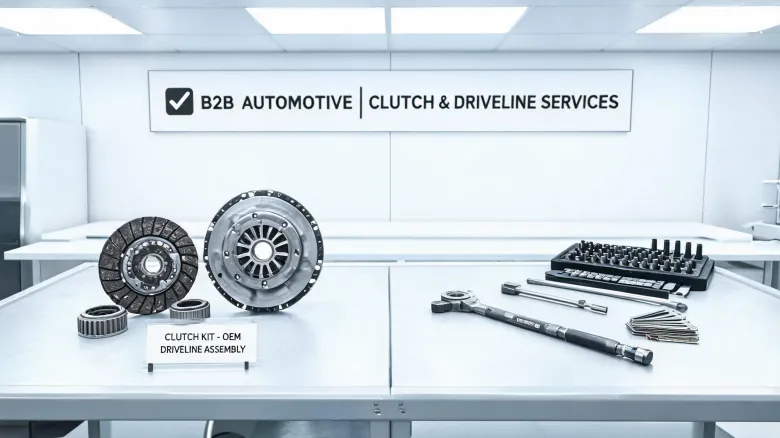
An Exedy OEM clutch kit normally contains the clutch disc and pressure plate. Depending on the application, it may also include the release bearing and pilot bearing. What it does not include is the clutch master cylinder. If the pedal is low, sticks to the floor, engages close to the carpet, or needs fluid added too often, the issue may be hydraulic rather than mechanical.
Check the fluid level and color. Have someone operate the clutch pedal while you watch the slave cylinder move. Bleed the system. If the pedal still feels mushy or does not release cleanly, the master cylinder may be bypassing internally. When the diagnosis confirms it, an application-matched Exedy clutch master cylinder is a normal fix. Just verify that the part includes the pushrod and mounting hardware before you order.
3. Check the Driveline and Leaf Helper Spring Before Calling It Clutch Chatter
Shudder under load can come from the clutch, or it can come from the rear axle moving under torque. On leaf-spring trucks, a tired spring pack changes the way the axle reacts. If the truck has an auxiliary leaf helper spring, inspect it too. A cracked leaf helper spring, loose U-bolts, or a broken center pin can let the axle wrap. When that happens, the driveshaft angle changes, and the driver feels a shudder on launch or during a hard pull.
I don't have hard data on how many clutch comebacks are really suspension comebacks. What I can tell you from our shop log: three in the last two years. All three showed up as vibration under load and none of them were fixed by a new clutch. Check spring bushings, U-bolts, center pins, U-joints, and the carrier bearing before you commit to the diagnosis.
4. Match an Exedy OEM Clutch Kit to the Transmission Code
The same year, make, and engine can still have more than one manual transmission. Spline counts, release bearing styles, and pressure plate bolt patterns differ. My mistake was in March 2022: six clutch kits ordered for a small fleet, and two were wrong. I used the vehicle list instead of the transmission codes. The two wrong discs had a different spline count. Freight and restocking was around $640. The real cost was two days of a bay waiting on parts.
When you place the order, write down the VIN and the transmission code from the build tag or service information. If the old clutch is already out, count the splines on the input shaft and measure the disc diameter. If a supplier asks for the transmission code and you don't have it, don't guess.
5. Ask What the Quote Includes and What It Leaves Out
Transparent pricing starts before the price. Some clutch kits include a release bearing and pilot bearing. Others include only the disc and pressure plate. Some include an alignment tool, and some do not. The word 'kit' can mean different things from different suppliers. The only useful question is: what exactly is in this box?
I've learned to ask what is not included before I ask what the price is. A vendor who lists the full scope, even when the total looks higher, usually costs less by the time the job is finished. If the part is an Exedy OEM clutch kit, the quote should include the Exedy part number, not just the vehicle model.
6. Inspect the Flywheel and Rear Main Seal Before Reassembly
This may not be a pre-order item if the engine is still in the vehicle, but it should be a pre-install item. Check the flywheel face for heat cracks, hard spots, and scoring. If the flywheel uses a machined step, measure it. Check the pilot bearing and the rear main seal while you have access. Skipping these checks can turn a proper clutch installation into a second repair visit.
7. Keep a Radiator Hose Tool on the Cart
Some clutch jobs don't require moving coolant hoses. Many do. If you are tilting the radiator or shifting hoses to reach the bellhousing bolts, old rubber can stick to the pipe. Pulling on it with pliers often tears the hose or bends the radiator outlet. A radiator hose tool is designed to break that bond without destroying the part.
This lesson cost me a radiator on a 2014 van. Actually, the hose tore first. Then the radiator outlet cracked while I was trying to remove what was left of the hose. The radiator was the only practical fix. A radiator hose tool would have cost a fraction of that and saved an hour of work.
8. Decide What the Test Drive Must Prove
Before you order parts, write down what a successful repair looks like. The pedal should engage at the right point. There should be no shudder during a slow launch. The engine RPM should not flare under load in a high gear. There should be no new bearing noise. Scan again for pending misfire codes after the engine is warm, and check for coolant leaks after the system reaches full pressure.
9. Record the Information That Helps You Later
Write down the VIN, transmission code, engine code, Exedy part number, input shaft spline count, clutch disc thickness, flywheel condition, fluid used, and torque values. Take photos of the pressure plate and the disc. If the same truck comes back, you will know exactly what was installed before you start guessing again.
The Costly Part Is Usually What You Didn't Check
None of this is meant to make the job feel complicated. Most clutch work follows the same pattern: replace worn parts, resurface or replace the flywheel, fix the leak, bleed the hydraulic system. The jobs that hurt tend to have the same pattern too: a wrong transmission code, an old spark plug that misfires under load, a cracked leaf helper spring, or a coolant hose pulled apart with too much force.
The most expensive word in a repair order is assumed. If you assume an Exedy OEM clutch kit is the only part the truck needs, or that an Exedy clutch master cylinder is correct without checking the VIN, you are gambling with someone else's downtime. Check the list, read the vehicle codes, and ask what the quote does not include. It won't make the work exciting, but it keeps the second visit from happening.