The Short Version
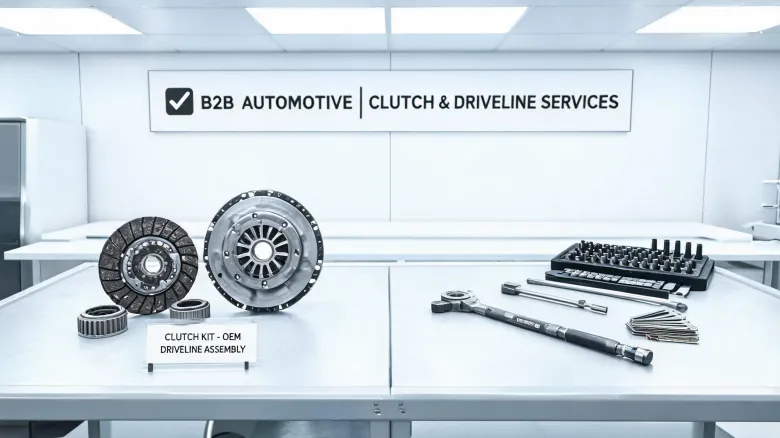
The Exedy Stage 1 organic clutch kit is a solid daily-driver upgrade. But the most useful part of Exedy Stage 1 organic clutch kit reviews isn't the reviews themselves—it's what they leave out. Order the lightweight flywheel at the same time, verify the kit contents, and plan for a proper break-in. In 18 months of ordering these kits for our independent shop, exactly one came back, and it was an installation failure, not a part failure. That's a better record than any other clutch brand we've used.
Why This Isn't Just Another Review
I'm the office administrator for a 12-person independent repair and performance shop. I manage all parts ordering—roughly $180,000 a year across nine vendor accounts. I report to the owner and the head mechanic. When I took over purchasing in 2021, I inherited a messy parts room and a supplier list nobody could explain. Since then, I've processed 60 to 80 orders a year, including more than 40 clutch or flywheel jobs.
So this isn't a review from someone who bolted on a kit in one weekend. This is the buyer who gets the phone call when a part doesn't fit, a kit is missing a bearing, or the invoice doesn't match what arrived. At least, that's been my experience with Exedy parts specifically—and with aftermarket clutch kits in general.
The First Mistake I Made
In my first year, I made the classic specification error: I assumed every kit meant the same set of parts. It didn't. I ordered a stage 1 organic kit for a customer's Civic, and it arrived without a pilot bearing. The old one didn't match the new input shaft. Cost me a $450 exchange and a very annoyed mechanic.
Looking back, I should have checked the included parts list before ordering. At the time, I trusted the product listing. (Should mention: the kit did include the release bearing, so I assumed the pilot was in there too. It wasn't.) That mistake changed how I order everything—not just clutches. Now I open the box and count before I schedule the install.
The Lightweight Flywheel Question
I was skeptical of the Exedy lightweight flywheel. A lighter flywheel means less rotational mass, which should make a car harder to drive from a stop. That's what I assumed. Didn't verify.
Then we installed one on a customer's Focus ST. The first week, the car stalled a few times—the driver had to relearn the engagement point. After that? Fine. The revs dropped quicker, throttle response felt sharper, and the clutch chatter was mild. The owner said it felt like a different car. The secret is pairing it with the organic clutch disc, which soaks up a lot of the engagement harshness. A lightweight flywheel can be miserable with a ceramic disc. With organic? Serviceable. That's the nuance the reviews miss.
If I could redo that first order, I'd order the flywheel at the same time as the clutch kit. The machine shop's resurfacing quote delayed the job by three days, and the customer had to borrow a car. Ordering both together also means you can balance them as an assembly if your machine shop offers it. In our case, that wouldn't have been necessary on a stock replacement crank, but it's still better than a separate shipment.
Break-in is also part of the equation. The organic disc needs around 500 city miles of stop-and-go driving, not 100 highway miles. We tell customers to avoid slipping the clutch for long periods, but also to do real starts and stops. That's the boring part. It's also the part that determines whether a kit lasts 30,000 miles or 90,000.
Brake Rotors, Mufflers, and the Water Pump Question
Once we're doing a clutch, we almost always quote brakes and exhaust work at the same time. That's where the other search terms come in.
Brake pad rotor pairing is more important than brand names. A hard pad on a thin rotor can cause shudder. We once installed a premium pad with a budget rotor, and it pulsed within 2,000 miles. The rotor wasn't warped—the pad transfer layer was uneven. Doesn't matter if you type 'brake pad rotor' into a search engine; the answer depends on the actual coefficient of friction. Ask the supplier for a match, or use a rotor certified for that pad material.
Speed muffler is another one. Most people want a performance muffler that isn't obnoxious. The mistake is choosing a muffler with the wrong inlet depth or case dimensions. We've had a universal speed muffler that physically didn't clear the rear subframe. Not ideal, but workable—after we cut and welded a new hanger. Better to measure first.
And the water pump: if you search 'how to prime water pump,' you're not dumb. A fresh pump can run dry if the system has an air pocket or the pump sits above the coolant level. We had a pump fail in 90 seconds because the mechanic didn't fill the block before starting. Actually, I'm mixing up two incidents—the failed one was on a truck, and the later one was a precaution on a Subaru. The lesson is the same: prime it or bleed it before the first start.
What Changed in the Industry
What was best practice in 2020 may not apply in 2025. The fundamentals haven't changed—torque specs, alignment, break-in—but execution has. Exedy's OE work in stamping, forging, and aluminum extrusions gives them manufacturing experience that shows up in aftermarket kits. The parts are stamped and measured to tighter tolerances than generic brands. In my opinion, that's why the kit feels consistent car to car.
But 'consistent' doesn't mean 'the same.' Kit contents change slightly depending on the application. That's why I now verify the part number against the vehicle VIN. It's a five-minute step that saved us from a wrong release bearing twice in 2024.
Also, prices move. In a March 2025 check across four distributors, the stage 1 organic kit ranged from $380 to $520, and the lightweight flywheel added $250 to $330. Those were public list prices, not including shipping. Treat any older review's price as a rough estimate.
Where This Doesn't Apply
This recommendation is for daily-driven street cars and light performance use. If you're drag racing, towing near the gross vehicle weight rating, or building a hard track car, the stage 1 organic kit is not the right choice. Go with a ceramic or sintered disc, and think very carefully about a lightweight flywheel—the engagement will be much harsher. Also, if the car has a dual-mass flywheel from the factory, check the crank pilot depth and transmission bearing surface before switching. You may need a shim. That's not an Exedy problem; that's an application problem.
Our shop's experience is mostly with Japanese inline-four engines and some V6s. A truck or European diesel may behave differently. But the purchasing process—verify, measure, break in—applies everywhere. Done.