Eight years into ordering parts for a three-location auto repair shop, I've bought well over $2 million worth of automotive components — and made enough expensive mistakes that my team now follows a checklist I wrote myself. These are the car parts questions I get asked most often, along with the answers I had to learn the hard way.
What is an O2 sensor on a car?
An oxygen sensor (O2 sensor) is a probe that threads into the exhaust system. It measures the amount of unburned oxygen in the exhaust gas and sends that signal to the engine control unit (ECU). The ECU uses it to adjust the air-fuel mixture — aiming for around 14.7:1 in a gasoline engine.
Most modern vehicles have at least two of them: an upstream sensor before the catalytic converter (used for fuel trim) and a downstream sensor after it (used to monitor converter efficiency). Some engines have one on each bank.
My first real parts mistake was in 2017, when I ordered an O2 sensor for a 2014 Corolla. Thread size matched. Connector didn't. Different pin layout, different part. $140 went in the trash, and the customer's car sat waiting while we overnighted the correct unit. Lesson: match the OEM part number from the VIN, not just the thread and sensor body.
Where can I buy an Exedy Mach 500 clutch kit?
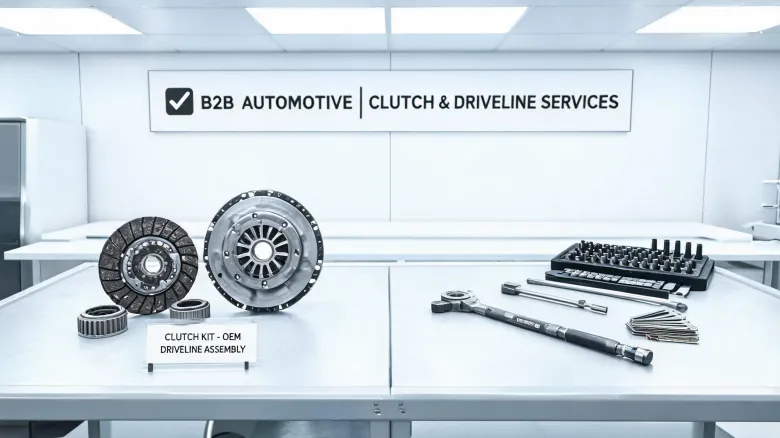
The Mach 500 is Exedy's high-performance clutch line for vehicles with serious torque output. It's not my first suggestion for bumper-to-bumper commuters, but when you need to put real power down, it is built for that.
Buy through Exedy's authorized distributor network or a dealer that lists Exedy as an official brand. Amazon and eBay listings can be legitimate, too, but verify that the seller is actually authorized by Exedy. I've seen sellers use stock Exedy photos and ship something that looked sort of right — but wasn't.
In 2020, I had two hours to order a Mach 500 for a customer's build. Normally I'd compare three quotes, but there was no time. I went with the cheapest eBay listing I could find, based on price alone (which, honestly, should have been my first clue). It never arrived. Roughly $400 gone, and I still had to buy the real kit from an authorized distributor. In hindsight, I should have pushed back on the deadline. But I made the call with incomplete information, and it cost me.
Per FTC guidelines (ftc.gov), sellers are not allowed to make deceptive product claims. If a listing says "universal" and can't give you a real Exedy part number, treat it as a red flag.
What is the Exedy Stage 1 organic clutch kit 07802LB?
The 07802LB is Exedy's Stage 1 organic clutch kit. Organic means the friction disc uses non-asbestos organic material rather than ceramic or metal. That gives smooth engagement, which makes it popular for daily drivers, light towing, and street cars with modest power upgrades. Stage 1 is roughly one step above stock: firmer clamp, better holding power, without the chatter of a race-style disc.
Some sellers list a partial set and call it a kit. Before ordering, confirm you're getting the disc, pressure plate, release bearing, and pilot bearing where applicable. I once skipped this step on an Exedy kit and the box arrived without a throwout bearing. Transmission was already on the floor when we noticed. It cost me two days and about $200 in extra shipping and parts.
Fitment isn't universal. The 07802LB fits specific vehicle applications, so cross-reference your year, make, model, and engine against Exedy's catalog before clicking buy.
What causes an AC condenser leak?
An automotive AC condenser sits in the front of the engine bay, usually ahead of the radiator, where air can flow across its fins to cool high-pressure refrigerant from the compressor. That position also puts it directly in the path of road debris.
Common causes:
- Rock strikes or road debris making pinhole leaks in the aluminum tubes
- Corrosion from road salt and moisture
- Vibration fatigue around the inlet and outlet fittings
- Previous collision damage, even minor front-end bumps
Warm air from the vents is usually the first symptom. You may also notice an oily residue on the condenser surface, since leaking refrigerant carries compressor oil with it.
On my own truck, a rock strike in June 2023 put a pinhole in one tube. It took about three weeks to leak down enough for the air to go warm.
If you're replacing a condenser, don't skip the receiver-drier and expansion valve or orifice tube. I tried saving a customer $90 by skipping that step in 2021. The compressor failed four months later from moisture and debris in the system — a $650 repair and a lesson in total cost of ownership.
How much does AC condenser leak repair cost?
In my shop, a full automotive AC condenser replacement for most cars and light trucks runs $450 to $750 at the independent level. Dealerships typically quote $800 to $1,200+. The condenser itself might only be $120 to $400; the rest is labor to recover refrigerant, replace the drier, vacuum the system, check for leaks, and recharge.
Those numbers were accurate as of early 2025, and refrigerant and parts pricing moved around through 2024, so expect some regional variation. R-134A and R-1234yf systems also cost differently, so know what your vehicle uses.
Compare the total job, not just the price of the part. And if you're tempted by a no-name discount condenser, remember that paying labor twice to redo a failed job is the opposite of saving.
What about a Goodman AC condenser?
If you searched for a Goodman AC condenser, you're looking at home HVAC — not automotive. Goodman manufactures residential and light commercial cooling equipment, and their condenser unit sits beside your house. This article is about car AC parts.
Home systems use different refrigerants (R-410A in modern units), operate at much higher pressures, and require EPA-certified HVAC technicians. Automotive AC is another world: R-134A or R-1234yf, car-specific components, different safety concerns.
If you have a car AC condenser leak, the sections above should steer you right. If a Goodman condenser is the problem, it's time to call a licensed HVAC contractor for a leak test and a proper quote.