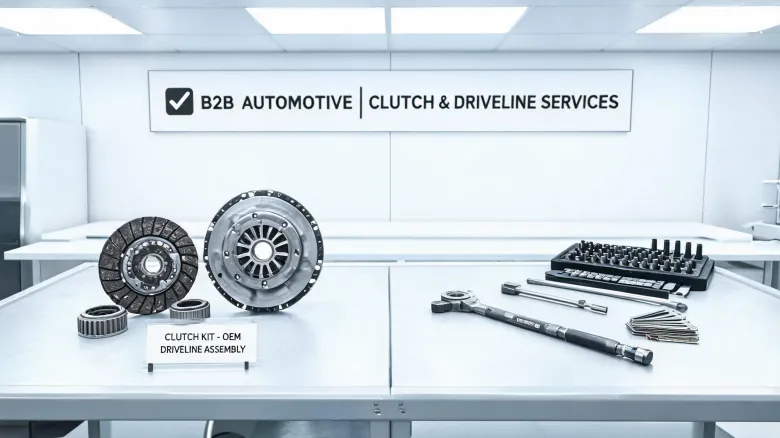
If you're buying a replacement clutch kit for your car, here's the answer right up front: always verify the exact part number and source from an authorized dealer before you spend a dime. I learned this the expensive way — roughly $2,300 in wasted parts, shipping, and lost time over the last six years. The worst part? Most of it was avoidable with a simple checklist.
I've been handling parts orders for a small auto repair fleet since 2019. I'm not an engineer, and I don't pretend to have all the answers. But I've made 14 documented mistakes, and I've kept the receipts (literally). This is the knowledge I wish someone had given me on day one.
The Clutch Kit That Taught Me Everything
In September 2022, I ordered what looked like the right clutch kit for a Honda Civic. The listing said it would fit. The price was tempting. But I didn't cross-check the OEM part number. It wasn't the Exedy 07099 OEM replacement clutch kit for that generation — it was a generic twin-plate kit meant for a different flywheel pattern.
When we opened the box, the pressure plate didn't align with the flywheel dowels. Actually, let me rephrase that: the pressure plate didn't align because the kit was designed for an entirely different clutch fork. It looked right until you held it up against the OEM part. Then it was obviously wrong.
That mistake cost us $590 in return shipping and a $780 redo plus a 3-day vehicle downtime. I still kick myself for not comparing the old clutch side by side with the new one before ordering. If I'd spent 15 minutes checking the part number against the Exedy catalog, I'd have saved all of it.
The lesson? Use the Exedy fitment guide (exedy.com) or a trusted parts database. For the Exedy Mach 500 clutch kit, which is the performance upgrade many people ask about, the rule is the same — verify your vehicle's application before even searching for a vendor. If you're wondering where can I buy an Exedy Mach 500 clutch kit, the answer is: from an authorized Exedy dealer or a reputable performance shop, but only after you confirm the part number for your exact engine and trans.
(Side note: comparing the cheap kit and the OEM side by side finally made me realize why people say "OEM matters." It's not just about the brand stamp — it's about tolerances. The cheap kit's bearing sat 2mm higher, which would have made the clutch release sloppy.)
Honda Fit Exhaust System: The 3-Day Fitment Nightmare
In October 2023, a customer wanted a cat-back exhaust for their Honda Fit exhaust system — specifically, they wanted a little more sound without ricer drone. Fine. I ordered a budget system that claimed "direct fit." It wasn't.
What I didn't check: the pipe diameter at the catalytic converter flange and the hanger positions. The system I ordered had 2.5-inch pipes; the Fit's stock flange was 2 inches. We had to cut and weld a reducer, then modify the rear hanger to clear the torsion beam. It worked, but the job took three days instead of a few hours. Worse than expected for a simple bolt-on.
The quote for the system was $280. The labor to make it fit? $450. Plus my own embarrassment. That's when I learned: for any Honda Fit exhaust system, confirm the exact pipe diameter and hanger configuration with the manufacturer's spec sheet before ordering. Not all "direct fit" is direct.
Honda Camshaft Position Sensors: The $450 Mistake
Another pain point: Honda camshaft position sensors. In March 2023, I bought a "compatible" sensor from an online marketplace to save a few dollars over the genuine one. It fit, but within a week the engine light came back with a "slow response (bank 1)" code. The aftermarket sensor had a slightly shorter signal pickup window, so the ECU couldn't read it accurately at high RPM.
We swapped it for a genuine Honda sensor and the issue disappeared. That experiment cost $450 in diagnostic time and two sensors, not to mention the customer's patience. The lesson: for camshaft position sensors, don't gamble on cheap aftermarket components — they differ in more than the connector.
And here's the thing — this isn't just from my experience. Tech guides from industry publications (like Counterman.com) stress that camshaft sensors must match OEM signal specifications. The bottom line is simple: match the OEM signal characteristics.
F250 LED Headlight Bulbs: Brightness Isn't Everything
Finally, a customer asked me to install the best F250 LED headlight bulbs they could buy. The kit looked great: high lumen count, cooling fans, compact design. But we didn't measure the bulb base length against the headlight housing's dust cap. With the fan assembly, the bulb extended 12mm too far. It hit the cap, and the cap wouldn't seal. Moisture eventually got into the lens.
We fixed it with aftermarket dust caps that added 20mm of depth. Not ideal, but workable. But the "super bright" bulbs were now pointing too low because the mounting ring wasn't designed for that length. We spent another two hours aligning the beam pattern.
Here's the tip: for an F250, the best LED bulbs are the ones that physically fit your housing. Check the base size (H11, 9005, etc.), the cooling fan length, and whether the bulb has an adjustable locking ring. The best specs on paper don't matter if the bulb can't sit in the reflector properly. We ended up choosing bulbs with separate driver boxes so the heat sink stayed outside the housing.
My Simple Checklist to Avoid These Mistakes (And Cut Repair Time in Half)
After making these mistakes, I built a pre-order checklist. Our team has used it for 18 months now, and it's caught 47 potential errors. It's boring, but it works:
- Cross-reference the OE part number — always compare with the OEM catalog or a reputable database.
- Measure before buying — for anything physical, check dimensions and clearances (pipe diameter, sensor pickup, bulb base).
- Check the return policy — know what you'll lose if the part doesn't fit.
- Buy from authorized sellers or direct from the manufacturer for safety-critical parts like clutch kits and sensors.
- Compare side by side if possible, with the old part or with the official drawing.
Switching to this checklist cut our average repair turnaround from 5 days to 2 days. That's the kind of efficiency that matters in a small shop — less downtime, happier customers, fewer overnight shipping charges. Yes, "verify parts before ordering" sounds obvious. But obvious things get skipped when you're busy. That's why it's a checklist, not a preference.
When OEM Isn't the Answer
Before you send me hate mail: OEM isn't always the right choice. For old cars with no aftermarket support, or for heavily modified performance builds, a custom or racing part might be necessary. For example, the Exedy Mach 500 is a performance clutch — not a direct upgrade for a stock daily driver. And with used cars, some parts are discontinued, so aftermarket is the only option.
Also, if you need a part today and your local shop has it in stock, the expedited convenience of buying locally might outweigh a cheaper online price. (We've all paid a premium for "right now" and that's okay, as long as you're aware it's a premium.)
At the end of the day, the real lesson is: spend 10 minutes verifying, or risk 20 hours redoing. That's the only "shortcut" I've found worth taking.