I manage parts purchasing for an independent repair shop. I've been doing it for the better part of a decade, and our annual parts budget runs well into six figures. I'm not a brand fetishist by nature. I'm the person who checks the invoice twice and tracks every order in our procurement system. So when I say spend more on something, it's because I've watched a cheap part cost more on the second visit.
There's no universal answer to which aftermarket part is best. There are only scenarios. If you've ever had a car come back with a leaking tail light or a chattering clutch, you know the invoice line item was never the whole story. The real cost lives in fit, labor time, downtime, and customer trust.
Per the IATF 16949 quality standard, automotive suppliers need documented process control. Per FMVSS 108, replacement tail lights need to meet photometric performance. Those aren't decorations. They're the difference between a part and a gamble.
Start by Sorting Your Scenario
Before you open a parts catalog, answer three questions:
- What happens if this part fails? A tail light can fail state inspection and hurt visibility. A fuel pump can leave someone stranded. A clutch can make a car undrivable and require another transmission removal.
- Who gets affected if I buy wrong? If it's your project car, you live with it. If it's a customer's car, you own the comeback and the reputation damage.
- What's the total cost over the part's life? Include re-install, return shipping, downtime, and lost trust. That's the part price plus the real-world consequences.
In my experience, these answers split into three branches: daily driver, performance build, and restoration. Each one has a different buying logic.
Scenario A: Daily Driver, One-Shot Repair
For a daily driver, the goal is simple: fix it once, with zero drama. There's no trophy and no track day. Just getting to work and getting home. That changes the math on clutches, fuel pumps, and lights.
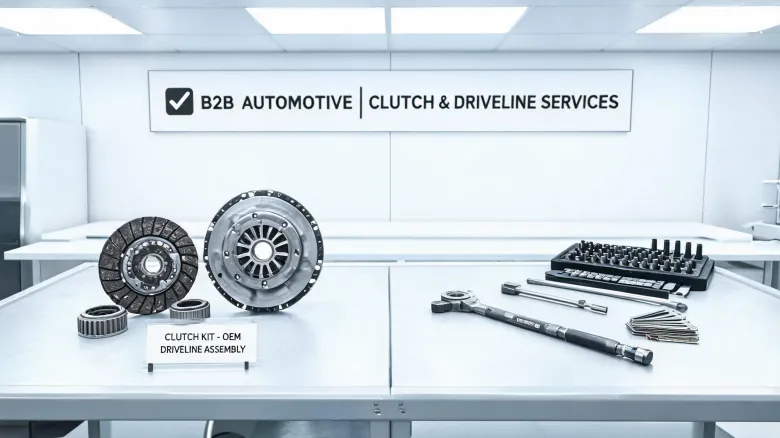
If a mid-size shop is replacing a clutch on a Civic, I'd pick an OE-quality kit first. The factory-style pressure plate and disc are enough for a commuter. You do not need a lightweight flywheel for a regular commute. The transmission has to come out either way, so the biggest cost element is labor, not the parts box.
Take the Nissan Maxima tail light as another example. The cheapest housing can look identical in the box. But water intrusion and connector corrosion show up later, usually after the warranty is gone. Per FMVSS 108, replacement lamps have to meet photometric requirements. A housing with no DOT or SAE marking is a red flag for me.
Same logic applies to a replacement fuel pump. Buy a stock-spec pump from a known brand. An oversized racing pump is not automatically better when it heats the fuel or needs a wiring upgrade you don't know about.
How to check a fuel injector before replacing it
Before ordering injectors, test them. Replacing injectors as a random guess is the kind of spend that blows budgets. If you don't know how to check a fuel injector, it's simple enough:
- Disconnect the electrical connector and measure resistance across the two pins. Most high-impedance injectors I check land between 11 and 16 ohms. Don't hold me to the exact range for every make, so look up the spec.
- Use a noid light to see if the injector is getting a pulse while cranking.
- If it clicks but doesn't spray right, bench test the spray pattern with injector cleaner and a 12-volt source.
Basically, you can spend five dollars on a noid light before spending a few hundred on parts. That's the total cost of ownership habit.
Scenario B: Performance Build and Enthusiast Car
Now the fun stuff. If the car is a weekend toy, the priorities shift. You're buying response, feel, and engagement, not just durability. That's where performance parts like the EXEDY names start to show up on my quotes.
Had a customer's transmission out a few months ago during a holiday rush. I had maybe an hour to decide between a known clutch kit and a cheaper alternative. Normally I'd compare in more detail, but there was no time. I went with the known brand. Not because the cheap one couldn't work, but because dropping the transmission a second time would make any savings a joke.
For a Honda Civic, the combination that keeps coming up is the EXEDY Honda Civic lightweight flywheel HF501 with the EXEDY Stage 1 Organic Clutch Kit 07802LB. That's a street-friendly pairing. The flywheel cuts rotating mass, and the organic disc is easier to modulate than a ceramic puck. It gives the car a sharper feel without making it miserable in traffic.
Here's the counterintuitive part. A lot of people jump straight to a stage three or four ceramic puck because it sounds aggressive. On most street-driven Civics, that's a mistake. A puck clutch chatters, it's hard to modulate, and it can make you hate the car. Stage 1 organic is often the higher-value choice because it stays livable and still holds up to spirited driving.
Part of why EXEDY works for us is the same reason I trust any supplier with serious engineering depth. EXEDY does its own tooling and dies, plus stamping, forging, aluminum extrusion, and CNC in-house. In my procurement experience, that kind of process control shows up in tolerance consistency and fewer comebacks.
Scenario C: Restoration or Collector Project
Restorations break the normal spreadsheet. Price still matters, but originality and correctness can matter more. That's especially true for cars like a Buick Grand National, where parts need to work with a turbocharged platform and decades-old wiring.
Take the Buick Grand National fuel pump. People assume a turbo motor needs the biggest pump money can buy. What they don't see is the stock wiring harness and fuel pressure regulator. A direct-fit, moderate-flow Grand National fuel pump with a relay harness is usually smarter than a drag-race pump that overworks the electrical system and heats the fuel.
For a Nissan Maxima tail light in a restoration, I'd look for a clean OEM housing or NOS piece before buying a reproduction. Reproductions can be good, but if the chrome fades or the gasket leaks, the whole back of the car looks wrong. A tail light is basically the night image of the car. In a show car, that's the brand image ending.
Vintage injectors? Same test process from Scenario A. On an older turbo car, new injectors might cost more than a full diagnostic session. Test before replacing, and you might find that new seals and a cleaning were all you needed.
Which Scenario Are You In?
Here's how I'd walk through it:
- If the car is your daily transport and the repair has to happen once, use Scenario A.
- If the car is a toy and you can tolerate some sharp edges, use Scenario B.
- If the car is a time capsule or an investment, use Scenario C.
What if you're in between? Daily-driven performance is the most common gray zone. In that case, buy the performance part that still behaves in traffic. That's why the EXEDY Stage 1 Organic clutch kit paired with the HF501 flywheel is a good middle path for a Civic: it adds response without living in the repair bay.
To be fair, this is shop logic. If you're a weekend wrench with free time and no customer waiting, you can take more risks. But the total cost frame still works. Your own time has a value, even when you're not billing anyone.
Bottom line: there's no one answer because there's no one car. A good purchase doesn't start with the brand. It starts with the scenario, the failure cost, and the total cost of the part's life. If you know those, you can decide when a solid EXEDY kit is a no-brainer and when a simple injector test is the smartest purchase of the week.