If you're staring at a P0335 or P0336 code and thinking about ordering a crankshaft position sensor, stop for a minute. Most 'bad sensor' no-start problems are actually wiring, air-gap, or trigger-wheel problems. The sensor replacement itself is a 45-minute job on typical four-cylinder; the second replacement is a two-day job.
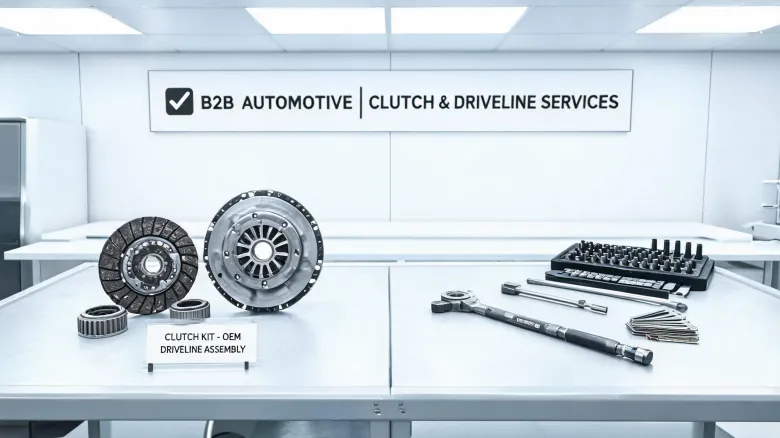
I work at Exedy, where replacement flywheels sit next to OE-stamped parts in the same facility. When a shop orders an Exedy FWHDA01 replacement flywheel or an Exedy FWHDC02FF replacement flywheel, I can usually guess the background: the sensor got replaced, the code came back, and now someone finally suspects the flywheel tooth trigger. Based on our returns data from 200-plus rush jobs over the last few years, that guess is right often enough to take seriously.
What the crankshaft sensor actually reads
The crankshaft position sensor doesn't sense the crankshaft itself. It reads a toothed wheel: on manual transmission cars it reads the flywheel, on most automatic transmissions it reads a flexplate. Every tooth passing the sensor creates a voltage pulse. The ECU counts pulses, measures engine speed, and uses the signal for fuel injection and ignition timing.
Here's the part most home mechanics miss: if a tooth is bent, chipped, or contaminated, the signal becomes uneven. The ECU sees a weird signal and sets a crank sensor code. Most buyers focus on the sensor price and completely miss the trigger wheel condition. That's the root of the return trip to the shop.
The 'any flywheel will work' idea comes from older cars where the sensor just counted one notch per revolution. Modern engines have tighter tooth patterns and closer air gaps. That changed. A replacement flywheel has to match the original tooth profile, offset, and balance. Put another way: new sensor, damaged tooth, same no-start.
Before ordering: check these 3 things
- Wiring and connector. A rubbed wire near the bellhousing sets the same code as a dead sensor.
- Air gap. If the sensor bracket is slotted, use a feeler gauge to set the gap to spec.
- Trigger wheel. Rotate the engine by hand and inspect all visible teeth through the sensor hole.
Check the harness. The entire harness, not just the connector. (Look for rubbing spots near the bellhousing, where the loom hangs closest to the exhaust.)
How to change a crankshaft position sensor (the process)
If the inspection checks out, then replace the sensor. Disconnect the battery, remove the under-tray if present, and find the sensor near the transmission bellhousing. Take a photo before unplugging anything. Remove the mounting bolt, twist the sensor out, and note the condition of the O-ring. Clean the bore before installing the new sensor.
Torque the bolt to the spec in the service manual. Do not guess. Some sensors use a spacer or shim that determines air gap; if the old sensor came out with a broken spacer, that's another clue. Lubricate the new O-ring with clean engine oil before seating the sensor.
Reconnect, clear codes, and crank. Use a scan tool to watch engine speed at cranking. If the RPM readout is low but steady, good. If the code returns immediately, go back to the trigger wheel.
The Friday 4:30 call
In March 2024, a shop called at 4:30 p.m. on a Friday. They had opened a 2.0L manual and found worn flywheel teeth during a clutch job. They needed an Exedy FWHDA01 replacement flywheel by Saturday morning so the car could be ready Monday. Normal ground freight would have been Monday. We found a way to put it on an early Saturday truck; the shop paid $60 extra in freight, and the car was ready for Monday delivery. The alternative was a lost work week and an angry customer.
That's why efficiency matters. On our production floor, automated inspection cut flywheel verification time from 15 minutes per part to under 2 minutes. Digital processes don't replace skilled judgment; they make the data available faster. The same logic applies to repairs: a quick check of the trigger wheel before ordering a sensor is a faster path than throwing parts at a code.
Why a replacement flywheel is a spec, not a shape
At Exedy, we don't just make a round piece of steel and ship it. The machined tooth profile and balance are the product. If you need a replacement flywheel for a manual application, the Exedy FWHDA01 replacement flywheel and the Exedy FWHDC02FF replacement flywheel are not necessarily interchangeable. They look similar. They are different part numbers for a reason: different tooth counts, offsets, or balance specs.
What I mean is that a quick sensor swap is quick only when the trigger-side parts are right. The sensor can be brand new and perfect, but if the tooth height is off by half a millimeter, the ECU will still see a bad pattern.
A communication failure I see a lot: a customer will say '2.0 liter, standard transmission.' I'll ask for the engine code or VIN. They'll say 'same as all of them.' The part arrives, and the trigger tooth count isn't right. We were using the same words, but meaning different engines. Discovered this when the sensor couldn't find a consistent pattern.
Per FTC advertising guidelines (ftc.gov), a supplier has to substantiate a claim like 'OEM replacement.' But 'fits' is not a spec. The person at the counter needs year, engine code, and VIN. When I'm triaging a rush flywheel order, that's the first question I ask, because the extra 30 seconds on the phone can save a second trip.
Other codes that look like crank sensor failures
Sometimes the problem isn't the sensor or the flywheel. Low battery voltage can produce a crank sensor code. A weak ground strap can do the same. On some modern cars, stuck radiator shutters can cause an engine-cooling event that sets a temperature code. If the engine stalls in the process, the crank sensor code can show up in the same scan. Radiator shutters won't directly set a P0335, but don't let the crank sensor code distract you from the temperature complaint.
And if you're doing other work at the same time, keep the same mindset. Use a strut compression tool if you're replacing struts, and treat the spring as a loaded component: release tension slowly, keep your face out of the path, and don't use an impact gun to buzz the top nut. It stores real spring energy. That's exactly how I treat flywheel inspections: the nasty part isn't the sensor, it's the energy and precision in the component next to it.
Boundary conditions
That's been my experience with vehicles that come back after a failed sensor replacement. At least, that's been our data on the parts side. Some engines have the trigger teeth machined into the crank, not the flywheel. Some use Hall-effect sensors with different failure modes. Your service manual is the authority, not a blog. If the sensor is cheap and the part is easy to reach, changing the sensor first is a reasonable diagnostic step. I just don't want you to change it twice.
And when you need a replacement flywheel, order by VIN. The Exedy FWHDA01 replacement flywheel and the Exedy FWHDC02FF replacement flywheel exist because different engine families need different trigger profiles. Get the right one the first time; rush freight is only a good deal when you don't pay it twice.