The Order That Started It All
I handle parts purchasing for a mid-sized independent repair shop, going on eight years now. I've personally made—and documented—13 significant ordering mistakes, totaling roughly $14,000 in wasted budget. I maintain our team's parts verification checklist now. That's because of what happened in March 2024 with an exedy clutch kit order.
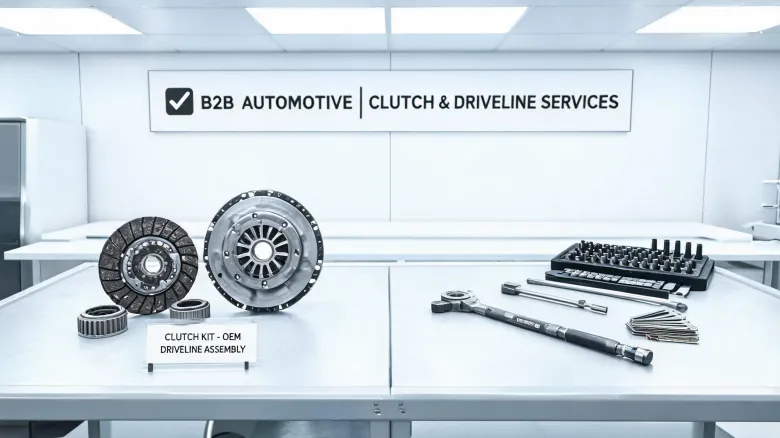
We had three clutch jobs scheduled the same week: two stock replacements and one performance swap. The whole parts order came to about $3,200. The performance one was a customer's modified sports coupe—he'd specifically asked for an exedy 05800 racing clutch kit. The other two were standard exedy clutch kits for daily drivers.
I got quotes from three suppliers. Here's something vendors won't tell you: the first quote is almost never the final price for ongoing relationships. There's usually room to negotiate once you've proven you're a reliable customer. That's also where the trap lives.
The Deal That Should Have Worried Me
One quote came back about 30% lower than the others. I thought I was being clever. I pushed for a volume discount across all three kits, and the sales rep said yes. I remember thinking, "this is how good purchasing works." In hindsight, it's how bad purchasing takes a shortcut.
What most people don't realize is that a "great deal" on a genuine part is often the first red flag. Genuine exedy clutch kit price points are fairly consistent across authorized distributors. When one seller's quote lands far outside that band, it's either a counterfeit, grey-market stock, or a part that's sat in a warehouse so long the grease has hardened. I didn't know that then. I do now.
The kits arrived in four days—fast, right? The packaging looked right. The part numbers matched my order forms. Boxes were sealed. I signed off without opening every box. The 05800 racing clutch kit box went straight onto the shelf. I didn't open it until the coupe was on the lift with the transmission dropped.
The Moment Everything Stalled
My lead tech came to get me from the office. "Come look at this." The clutch disc didn't match the spline count of the original unit we'd pulled. I honestly thought he was mistaken—I'd been ordering parts for years, and the 05800 had been correct for this platform before.
Or rather, it had been when ordered from our usual source. This one came from a discount supplier I found online. That 30% price difference? This is what it looked like on the other side.
Even after I approved the expedited replacement, I kept second-guessing. What if the new one didn't fit either? The five days until it arrived were stressful. I didn't relax until the tech said the input shaft slid home and the throwout bearing lined up the way it should.
The wrong part had already cost us $890 in redo labor, $145 in expedited freight and restocking fees, and three days of floor space with a car half-dismantled. The customer called three times. My service manager handled it with patience I still don't fully understand. I don't want to think about the goodwill damage—it never shows up on a P&L, but every shop owner knows it's the most expensive line item.
The Checklist That Stopped the Bleeding
After that, I built a pre-order verification checklist:
- Confirm the part number against the VIN, not just year/make/model.
- Cross-reference the application in at least two independent sources, including the manufacturer's catalog.
- Buy from an authorized distributor—no exceptions. Grey-market "deals" aren't deals.
- Open the box when it arrives. Read the fitment notes. Check splines and dimensions against the old part when available.
- Photograph everything. Document discrepancies immediately.
The checklist adds maybe 10 minutes per order. It's annoying. But in the past 18 months, it's caught 47 potential errors. Not all were clutch-kit catastrophes. Some were small—a wrong gasket set, a mismatched pilot bearing, a flywheel ordered for a car that turned out to have an automatic transmission. Each one would have cost time and money.
The Same Pattern, Other Parts
Here's what I've realized: the pattern repeats across everything a shop orders. Same failure mode—trusting a part number without verifying—costs money in every corner.
Take the 2008 Cadillac CTS alternator we ordered last year. The OEM spec was 150 amps. The aftermarket "direct replacement" had the right connectors and brackets, but it was a 140-amp unit. The car ran, yet the battery light flickered whenever the driver switched on the seat heaters and rear defroster. We spent two hours diagnosing before someone read the print on the alternator case. Part number matched. Spec didn't. That two-hour diagnostic ate the profit from the whole job.
Then there's the infrared heater with thermostat I bought for the service bay. I nearly ordered the 208V version because it was listed as "commercial grade." Our supply is 240V. The element resistance is different at 208V, so the heater would've run underrated and the thermostat would've read everything wrong. Reading the data plate and calling the manufacturer took five minutes—cheaper than returning an 85-lb heater at $65 in freight.
And the ignition coil question? Customers ask us how to know if their ignition coil is bad pretty regularly. Common signs: misfires under load, rough idle, codes P0300 through P0304. But here's the thing we learned the hard way: the coil might test fine while the real problem is the harness connector or a bad ground. You swap the coil, the code comes back. Same lesson, different hardware: dig past the part number and confirm the actual spec.
What an Exedy Clutch Kit Price Actually Tells You
Let me address the pricing question directly, since it's usually the first thing people ask. As of January 2025, standard exedy clutch kit prices run roughly $120–$450 depending on the vehicle application. Performance kits like the exedy 05800 racing clutch kit generally sit in the $500–$900 range, based on prices publicly listed at authorized online distributors. Rates move with material costs and exchange rates, so verify current numbers before you budget around them.
That range isn't just brand markup. It reflects clamping force, disc material—organic versus Kevlar versus cerametallic—whether the release bearing and pilot bearing are included, and the quality control behind spline tolerances and balance.
The "deal" I took wasn't cheaper in the end. The real cost of a part includes downtime if it fails, freight if it's wrong, and the credibility hit when a customer's car comes back on a tow truck. A 30% discount on a genuine part can become a 150% markup on effort.
To be fair, I get why people chase the lowest quote for an exedy clutch kit. Budgets are real, and quotes get compared. But in my experience, the shops that make the most money aren't the ones finding the cheapest parts. They're the ones with the fewest comebacks.
Why I'm Boring Now
I don't enjoy being the person who makes a tech read a fitment note for the third time. I don't like paying for a parts catalog subscription. And I definitely don't like explaining to a customer that their car is going to be late because of a spline mismatch on a clutch I ordered.
Granted, this approach takes more upfront work than typing a part number into a search bar and hitting buy. But it saves time later. The verification tools help—VIN lookup software, digital catalogs, supplier databases. I use them daily. But there's no substitute for opening the box and reading the note that says "Spline updated, verify fitment." Yeah, that note was in my box. I just hadn't opened it.
Switching to this process cut our parts-related delays from about five days per month to one. It's not about moving faster—it's about doing fewer expensive loops. That's what efficiency means to me now. Not automating every decision. Putting the checks where they hurt least.
The most expensive word in our shop is "assumed." I say it less now. The checklist helps. So does taking the ten minutes, opening the box, and looking at the part like it's the first one you've ever seen.
You probably won't make a $3,200 mistake if you take even half of this advice. But writing this is my way of making sure you don't have to learn it the way I did.