Saturday, May 11, 2024. 2:12 p.m.
The call started with a question I didn't expect: “Do you know what the edge of your part feels like?”
A quality manager at one of our customers had just opened a skid of stamped clutch covers that arrived the evening before. A small nick in our trim die left burrs on the edge of 350 pieces. The burr measured up to 0.4 mm in places. Our internal drawing allowed 0.15 mm. The reject was earned.
In my role at Exedy, I coordinate the rush orders that never appear on the production plan. Over the last eight years, I've handled 200-plus emergency jobs—same-week turnarounds, airport drop-offs, line stoppages at 3 a.m. This one was different. That question, “how does it feel?”, was not about geometry. It was about perception.
How a burr becomes a brand problem
These covers were headed for a clutch assembly line, not a display shelf. Once installed, nobody sees them. Before installation, somebody has to touch them. A rough edge makes that person slow down and wonder. That pause is a quality failure, even when the gauge still says okay.
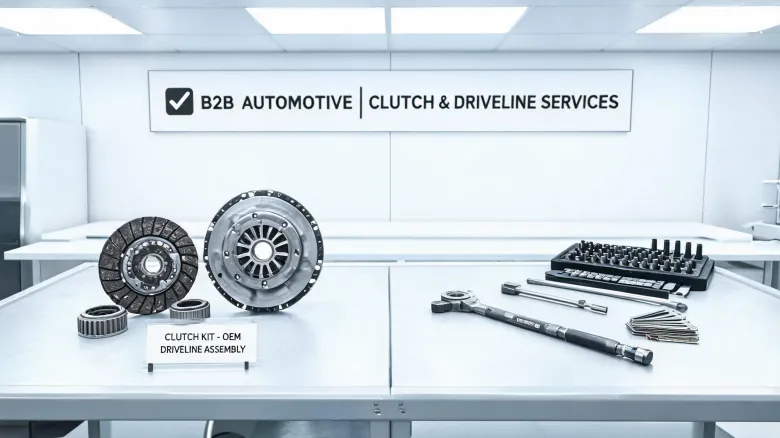
The stamping operation is the part of Exedy that most people never see. The same kind of covers go into an Exedy 07099 OEM replacement clutch kit and an Exedy 05800 racing clutch kit, depending on the application. The specs are different. The expectation is the same: when an operator picks up the part, it should feel like it was made by someone who cared.
Why I nearly chose the wrong fix
A replacement run would normally take four working days. We had about 40 hours before the customer's line start on Monday. My first instinct was to send two technicians to their receiving dock with deburring tools and clean up the edges. I went back and forth for almost two hours. Option A saved the schedule. But it also put us in a position where the customer had to accept a hand-finished part after rejecting our process once. That felt wrong.
The quality manager said it more clearly than I could. “If we let a supplier touch up a rejected part in our dock, my line team will question every other part in the skid. They won't remember the gauge result. They will remember the fix.”
So we reran the parts. That meant pulling the die, resurfacing the trim insert, running 354 covers (350 plus four spares), inspecting every edge, and getting them to the airport before the Sunday freight cutoff.
At 6:20 p.m., the freight broker called. The cutoff was earlier than normal. I almost switched to a rental van and a 14-hour drive. Then our die maintenance lead sent a photo: the die was already out of the press and clamped on the bench. He had started before I asked.
By 9:45 p.m., the reground insert was back in the die. Trial part. Gauge check. Another trial part. Not a perfect evening, but a workable one. We packed the parts at 2:35 a.m. and the truck left for the airport at 3:10. Sunday afternoon, the parts arrived at the customer's dock. Monday morning, no second phone call came. In my job, that silence is the best outcome.
What the re-run taught me
The shift records later showed the edge had started to feel rough after the first 1,100 parts. The operator noticed it, but the dimensional reading was still inside the window, so he decided to finish the run and change the insert Monday. I signed off on the same logic. I assumed the last 900 parts would be close enough. They weren't.
The cost was not just $5,200 in overtime and freight. The real cost was a reminder that people feel quality before they measure it. A quality manager can excuse an occasional process failure. He cannot excuse a pattern that tells him we stopped paying attention.
Now, if anyone in our line flags a rough edge or an odd sound from a die, we stop and check it before we finish the batch. It costs an hour or two. The alternative costs trust.
Simple parts, same trust
A week after that shipment, a customer asked: “Is the timing chain part of the engine?” The short answer is yes. The timing chain sits inside the engine, connecting the crankshaft and camshaft, and a failure can be expensive. But I didn't hear that question as a beginner's question. I heard somebody doing exactly what our quality manager did: checking whether he could trust the answer before spending money.
The same logic applies to products that look less dramatic than a clutch kit. An exhaust pipe repair kit may not have a racing pedigree. A 9007 LED headlight bulb may not seem technical. But each one is a promise. When a person opens the box, they should be able to trust what is inside. If an exhaust repair kit is missing a clamp, or a 9007 bulb has the wrong base, the customer does not blame the product category. They blame the brand.
That weekend taught me that a 0.4 mm burr can become a brand problem. Fixing it meant more than hitting a number. It meant proving to a customer that their impression still mattered to us. Quality is not just an inspection result. It's the feeling someone gets before they install the part. I still try not to forget that.