-
Why Does My Turn Signal Flash Fast? The 60-Second Version
-
The Way I Triage Calls: Is This Really an Emergency?
-
Scenario 1: Turn Signal Hyperflash
-
Scenario 2: Clutch Slipping or a Flywheel That's Been Machined One Time Too Many
-
Scenario 3: Piston Skirt Audi Engine Noise—a Cold Knock That Disappears
-
Scenario 4: Misfire and Spark Plugs
-
How to Judge Which Scenario You're In
If you've ever searched why does my turn signal flash fast, you're probably standing next to a car blinking like Morse code. The short answer: the flasher relay thinks one of the bulbs is out. The longer answer: it depends—and that's the point of this article.
I handle rush parts orders at Exedy, a company that makes stamping dies, clutch kits, flywheels, forging parts, aluminum extrusions, and CNC-machined components for the automotive industry. In my role coordinating urgent shipments, I've processed more than 200 same-day requests in the last five years. Some of those calls were genuine emergencies. Most were not. Learning to tell the difference is what this guide is about.
Why Does My Turn Signal Flash Fast? The 60-Second Version
Hyperflash usually comes down to one of three things:
- A burned-out bulb on that side
- An LED bulb installed without a load resistor or LED-compatible flasher
- A bad ground or wiring issue in the tail light housing
In that order. I don't have hard data on how many hyperflash calls we get per month, but based on the parts orders I've seen, most people replace the flasher relay first and the bulb last—backwards. Wait, check the bulbs first. It takes ten minutes and costs less than twenty dollars.
The Way I Triage Calls: Is This Really an Emergency?
When a shop calls me on a Friday afternoon for a clutch kit, they often say urgent—the car is on the lift. Sometimes that's true; the customer needs the car Monday morning. But the questions that follow tell me whether they're ready to finish the job. Do they have the flywheel? Are the throwout bearing and pilot bearing on the ticket? Is the clutch disc the right spline? These are the things that turn a rush job into a repeat job.
Here's the pattern I keep seeing: the problems that make people panic are often the easiest to fix, while the problems that seem to go away can be the most expensive. Let's sort them by situation.
Scenario 1: Turn Signal Hyperflash
If only one side blinks fast, it's a fix it this weekend problem—not a cancel your plans problem. You can drive it. But don't ignore it for months, because a bulb that's on the way out will eventually leave you with no turn signal at all.
If you recently installed LED turn signals without load resistors, the fix is adding resistors or swapping to an LED-compatible flasher. That's the most common reason people search why does my turn signal flash fast after a bulb upgrade. It's not the relay's fault; the relay is just doing its job by noticing the reduced current.
If the bulbs are fine and it still flashes fast, check the socket ground. The flasher relay is rarely the culprit. I've seen a relay swapped three times before someone found the corroded socket. Check the wire first, then the relay.
Scenario 2: Clutch Slipping or a Flywheel That's Been Machined One Time Too Many
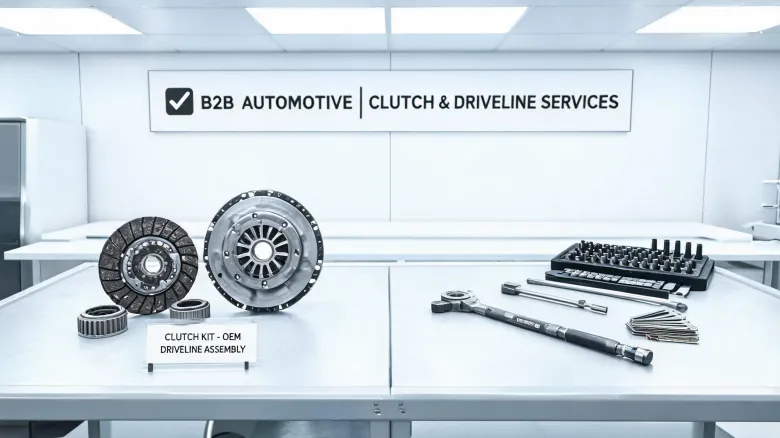
Clutch problems are the biggest source of is this urgent? calls in our shop. In March 2024, a repair shop called at 2:30 p.m. needing an Exedy flywheel for a customer's car that was leaving on a 500-mile trip the next morning. Normal ground freight would have taken four days. We put the flywheel on next-day air, paid $140 in shipping on a $360 part, and the shop installed it that night. The customer's alternative was missing the trip and paying for a tow when the original clutch finally let go.
The urgent part wasn't the clutch disc—it was the flywheel. If a clutch is slipping, the car still moves, but every mile of slip generates heat. That heat can crack or blue the flywheel surface. A clutch job that might have been $800 becomes a clutch-and-flywheel job at $1,500 or more.
For high-horsepower builds, one common part number is the Exedy Stage 2 Cerametallic Clutch Kit 08951. It uses a cerametallic disc that holds a lot of torque, but it's not a smooth city pedal. It chatters at low RPM and engages more abruptly than an OEM-style disc. That's expected. The clutch is telling you what it is.
Per FTC guidelines on performance claims, if a brand states a torque rating, there should be test data behind it. That's why legitimate manufacturers publish conservative numbers instead of throwing out a headline horsepower figure with no dyno sheet. When you're comparing kits, look for that substantiation.
If the transmission is already out, look at the Exedy flywheel before closing it back up. A lightweight flywheel makes the engine rev faster but also makes gear rattle more obvious at idle. That rattle is normal—annoying, but normal. A heat-cracked flywheel, on the other hand, is not normal and not safe to reuse.
Scenario 3: Piston Skirt Audi Engine Noise—a Cold Knock That Disappears
Here's the one that actually worries me. A low knock on a cold start that fades once the engine reaches operating temperature sounds like good news. In some cases, it's not. Piston skirt Audi engine noise is a known failure pattern on certain 2.0 TFSI engines. When the piston skirt scuffs, it can create a cold piston slap because the piston-to-wall clearance is too large until the piston expands from heat.
If the knock disappears when warm, people assume it was harmless. For piston slap from excessive clearance, that's the wrong read. The clearance is still there; the heat just masks the noise. This is not a use thicker oil and hope situation. It's a have the cylinders borescoped situation.
I don't have hard data on how many of these engines get rebuilt versus repaired, but from the orders I've seen, the ones that get caught early are rare. Most shops only see them after scoring has already damaged the cylinder wall. A piston replacement is a few hundred dollars in parts; a short block is a few thousand.
While you're having the plugs pulled for that check, use the NGK spark plug finder to confirm the exact plug. The heat range and gap matter, especially on engines with high cylinder pressure. A plug that's too hot can cause pre-ignition that sounds exactly like a bottom-end knock. Wrong diagnosis, expensive outcome.
My experience is based on maybe 300 rush orders from independent shops, mostly Japanese and domestic platforms. I haven't personally torn down a 2.0 TFSI head, so I can't tell you the exact bearing clearances. But the symptom pattern—cold knock, warm silence—is something I would not write off.
Scenario 4: Misfire and Spark Plugs
A misfire is usually a same day or next morning problem, not a pull over now problem—unless the check engine light is flashing. A flashing CEL means unburned fuel is dumping into the catalytic converter. That can overheat and destroy the converter, which is a $1,000-plus part. If the CEL is steady, you have more time, but don't leave it for weeks.
Start with the plugs. It's tempting to blame a coil, but plugs fail more often and they're cheaper. There's something satisfying about a set of correctly gapped plugs solving a problem that had people throwing coils at it. The old way was flipping through a paper catalog; the efficient way is a plug finder that knows the year, engine, and VIN. It cuts down the data-entry errors we used to see on handwritten orders. Speed, accuracy, availability. In that order.
How to Judge Which Scenario You're In
When you're deciding whether to call for a rush order or schedule something next week, ask three questions:
- Does the symptom affect drivability? If not, schedule it. If yes, prioritize it.
- Is it getting worse? A slipping clutch won't un-slip itself. Neither will a piston skirt knock.
- What does waiting cost? A wrong spark plug is a $40 error. A scored cylinder is a $4,000 rebuild.
Not every warning light needs a same-day delivery. Not every strange noise means the engine is about to die. The question is whether the condition is worsening and how much the next repair will cost if you wait. That's the triage. I see it on every order I process—and the people who stop to understand it are the ones who get home without the repair bill from hell.