When I first took over parts purchasing for our company fleet in 2020, I assumed the cheapest clutch kit quote was the smartest choice. Three reworked clutch jobs later, I learned otherwise. What matters is the total cost—the kit price, the labour hours, the vehicle downtime, and the second round of repairs when you make the wrong call the first time.
I'm the office administrator for a 45-person logistics company. I handle the parts and maintenance ordering—roughly $180,000 per year across 9 vendors. I report to both operations and finance, which means I live with the tension between keeping costs down and keeping trucks running.
So, which clutch kit should you buy? Honestly, it depends on your situation. There's no universal answer. Any supplier who tells you otherwise is selling convenience, not reality. What I can do is walk you through the four scenarios I've run into in nearly five years of ordering parts, and help you figure out which one you're in.
The Four Scenarios
Here's the map. Find your starting point, then jump to the section that matches.
- Scenario 1 – Stock replacement: You're returning a vehicle to factory condition.
- Scenario 2 – Working vehicles: The truck or car works for a living—towing, hauling, city traffic.
- Scenario 3 – Budget repair: Cost is the dominant factor. Functional, not fancy.
- Scenario 4 – Wrong diagnosis: The clutch might not be the problem at all.
Scenario 1: Stock Replacement
This is the cleanest case. The clutch is worn, the vehicle is otherwise standard, and you want it to behave exactly like it did when it left the factory.
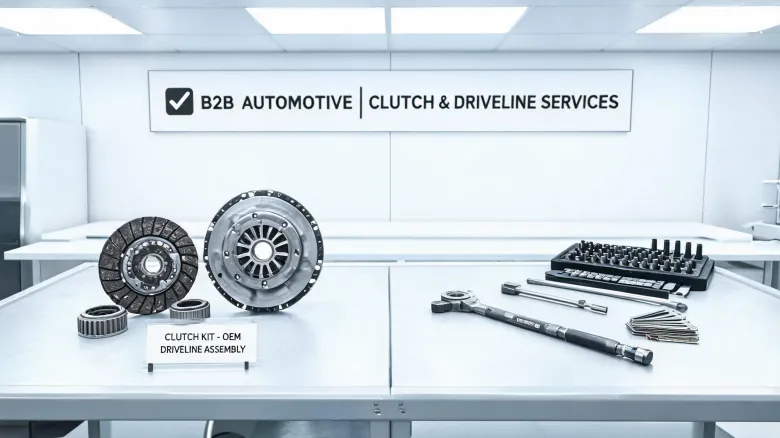
What works here: a complete clutch kit with OEM-spec components. I look for kits that include the clutch cover, the disc, the release bearing, and the pilot bearing in a single box. The Exedy clutch kit KIK1004 is a decent reference point for this category—it's a complete kit that shows how the whole assembly is engineered as a matched set.
Why does the full kit matter? Because the disc and the cover are designed to work together. I made the mistake early on of purchasing a cheaper cover separately, thinking the old disc would last a bit longer. It didn't. The engagement was harsh, and the vehicle came back within three months with a burnt disc. The redo cost more than the original kit would have.
What I Verify in a Replacement Exedy Clutch Disc
- Friction material matched to torque output. Standard organic is fine for most stock vehicles.
- Spline count and input shaft fitment. Check this against the vehicle build date, not just the model year.
- Release bearing in the kit. You're already in the bell housing—paying labour twice for a $30 bearing is a false economy.
Scenario 2: Working Vehicles (Fleet and Commercial)
If the vehicle works for a living—delivery van, towing rig, service truck that idles in traffic all day—your requirements change. Here's the part that goes against conventional wisdom: the stock OEM kit may not be enough for a vehicle that's always loaded. For fleet duty, you need more margin.
The Heavy-Duty Difference
What works: a heavy-duty clutch kit with a sprung-hub disc and a cover rated for increased torque capacity. The Exedy KIK1004 is great for standard applications, but for fleet vehicles, I check the hub and the torque rating against the engine's peak output. A truck that's always loaded will eat a lightweight disc in six months.
This is also where I coordinate multiple repairs into one labour slot. If a truck needs a Cat 3406E water pump and a clutch around the same time, I order both and get them done in one bay visit. The savings are substantial—not because the jobs overlap directly, but because the vehicle is already staged and the shop is already booked.
Just don't compensate for the combined repair costs by choosing a cheaper clutch kit. I have mixed feelings about budget kits in working vehicles. On one hand, the upfront savings look great on a purchase order. On the other, I've watched a truck return with a glazed disc and a ruined cover three months after install. The second repair wiped out whatever the initial discount promised. For working vehicles, I stick with known brands—Exedy being my usual order, because they have the engineering data to back up their torque ratings.
Scenario 3: Budget Repair
I get it. Sometimes the vehicle book value doesn't justify a premium kit. Budget is tight, and you just need the car rolling. That's legitimate—but you have to cut the right corners.
What You Can Skip
- Performance upgrades (ceramic discs, high-pressure covers, lightened flywheels).
- Flywheel resurfacing, if the contact surface is smooth and within specification.
What You Cannot Skip
- Replacing the release bearing while the transmission is out. It's a small part, but accessing it costs hours of labour. Skipping it is not a saving.
- Replacing the pilot bearing if your application has one. Same logic.
- Proper clutch disc alignment during install. There's no shortcut for this.
I knew I should replace the release bearing on a shop's work truck in 2022, but thought, "what are the odds it fails?" The odds caught up with me in under two months. The old bearing with 90,000 miles on it decided that was its moment. The second repair cost the shop more than the original kit price. Lesson learned the hard way.
The same principle applies across vehicle types. If your shop services ATVs or motorcycles, the logic carries over. When I order a Yamaha clutch kit for our maintenance fleet, I choose the complete kits that include friction plates, steel plates, and springs. Piecing together a clutch from a parts fiche might save a few dollars in line items, but it creates the same risk of a comeback job.
Scenario 4: When the Problem Isn't the Clutch
Here's the scenario that has cost the industry more wasted labour than any other: misdiagnosis.
A driver reports loss of acceleration under load. Someone assumes the clutch is slipping. The clutch gets replaced. The symptom remains. Now the customer paid for an unneeded clutch job, and the real problem is still broken.
Head Gasket: The Usual Suspect
A blown head gasket can cause power loss and rough running, especially under load—which can feel like a slipping clutch. How much does it cost to repair a head gasket? Based on listed national averages from repair cost databases, head gasket replacement for a typical engine runs between $1,500 and $2,500, including parts and labour. That's more than double the cost of an average clutch kit. Getting this diagnosis wrong is expensive.
The key diagnostic clue: clutch problems follow engine speed versus vehicle speed. Head gasket issues show up as overheating, white smoke, or coolant consumption. Check the cheap things first. Coolant level. Oil condition (milky appearance?). Overheating under load. These take minutes to verify, and they prevent expensive mistakes.
Water Pump Failure Can Fool You Too
A failing Cat 3406E water pump can trigger engine protection modes that reduce power—and that power reduction can feel like a transmission or clutch problem. The coolant leak might not even be visible at first. If the engine is running hot but the clutch engages and releases cleanly at idle, stop and check the cooling system before you order any clutch parts.
How to Determine Which Scenario You're In
Here's the framework I use every time I approve a clutch kit order. It takes the guesswork out:
- Is the vehicle stock? If yes, go with Scenario 1. Buy a complete OEM-spec replacement kit from a reputable brand. You don't need to experiment.
- Does the vehicle work for a living? If yes, move to Scenario 2. Get a heavy-duty kit with a sprung hub, and verify the torque rating against your application.
- Is cost the deciding factor? Apply Scenario 3. Skip the performance extras, never skip the bearings, and keep the kit complete.
- Is anyone sure it's the clutch? If not, work through Scenario 4. Check coolant, oil, and engine behavior under load before ordering anything.
One warning from a buyer who learned the hard way: verify part numbers against the vehicle's build date. I said "clutch kit for this vehicle" to a vendor once. They heard "the most popular variant for this model year." We discovered the mismatch only when the transmission was already on the floor. That cost us time, labour, and credibility with the workshop manager.
The same standard applies to quality claims. When a supplier says "OEM quality," I ask for evidence. Per FTC advertising guidelines, claims should be substantiated—and any manufacturer who can't show testing data, material specs, or application-specific engineering probably doesn't have it. Reputable brands like Exedy have that data ready. That's an easy filter.
The Bottom Line
The right clutch kit is the one that matches your actual situation. For stock replacements, buy the complete kit. For working vehicles, upgrade to heavy-duty. For budget jobs, keep the kit complete and skip only the performance extras. And for any job where the diagnosis is uncertain, check the engine basics before you spend anything.
An informed buyer asks better questions and makes faster decisions. If this guide saves you even one redo, it's done its job.