-
What I’m Actually Comparing Here
- Clutch Kits: Exedy vs Generic Aftermarket
- Serpentine Belts vs Timing Belts: The Confusion I See Everywhere
-
Throttle Body Hoses: The Small Part That Causes Big Headaches
- 2017 Catalytic Converter: When Original Design Matters More Than Price
- The Vendor Comparison: Online vs Local vs Direct OEM
-
My Bottom Line Advice
Back in 2021, I was put in charge of ordering parts for our company's small fleet and maintenance team. I wasn't an automotive expert—I was an office administrator who suddenly had to figure out the difference between a serpentine belt and a timing belt. Along the way, I’d like to think I learned a few things about buying parts like an Exedy clutch kit or deciding whether to replace a 2017 catalytic converter before it fails. This article is basically a comparison-driven guide, the way I wish someone had explained it to me: OEM vs aftermarket, genuine vs budget, and what to check before you order.
What I’m Actually Comparing Here
When you buy auto parts for a business, you’re not just comparing prices. You’re comparing risk and downtime. The core comparison in this article is OEM (original equipment manufacturer) vs aftermarket, but I’m also going to touch on a few specific product decisions that come up again and again: clutch kits, hoses, and belts.
The comparison framework I use is simple:
- Fit certainty – will it work the first time?
- Total cost – not just the price tag, but installation, downtime, and rework.
- Supplier reliability – can you get support if something goes wrong?
That’s it. Those three dimensions drive most of my purchasing decisions now.
Clutch Kits: Exedy vs Generic Aftermarket
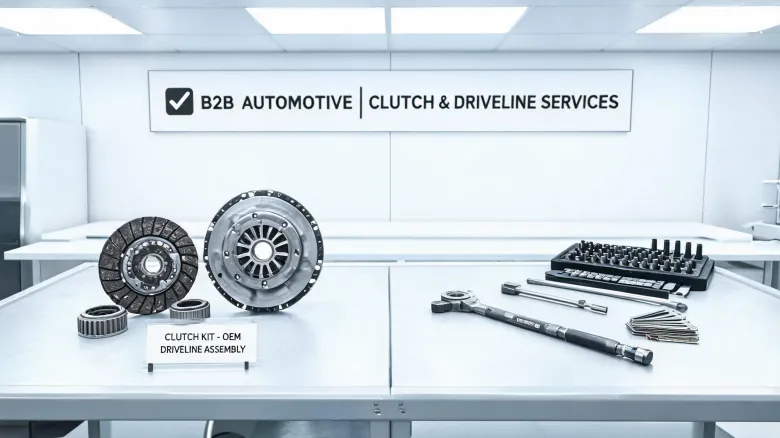
The first big comparison that comes up is clutch kits. If you’ve searched for an exedy stage 1 organic clutch kit 07802lb or just an Exedy clutch kit, you know there’s a price spread. But the real comparison isn’t price–it’s predictability.
Fit and First-Time Accuracy
An OEM-grade clutch kit, like the Exedy kits, is engineered to the original specs. That means the throwout bearing, pressure plate, and disc are matched. With a generic aftermarket kit, you sometimes get parts from different batches. Not always. But sometimes.
The question everyone asks is, “Will a cheap kit work?” The question they should ask is, “What happens when it doesn’t?” In our case, a no-name kit cost us a full weekend of labor because the release bearing sat slightly different. The vehicle was down for two extra days. That was more than the price difference.
Long-Term Cost
I’m a fan of total cost thinking. The cheapest part can be the most expensive if it fails early or causes a second repair. An Exedy clutch kit might cost more upfront, but the labor is the real expense. You don’t want to pay labor twice.
That’s worth saying clearly: the labor to replace a clutch is roughly the same whether the part costs $80 or $250. So if the cheap part fails at 30,000 miles instead of 60,000, you pay labor twice. Not a bargain.
Serpentine Belts vs Timing Belts: The Confusion I See Everywhere
One of the most common searches that brings people to parts sites is “is the serpentine belt the timing belt”? The answer is no. They’re absolutely different, and the comparison matters because confusing them can ruin an engine.
Location and Function
The serpentine belt drives accessories like the alternator, power steering pump, and air conditioning compressor. It’s outside the engine, and you can usually see it when you open the hood. The timing belt is inside the engine, under a cover, and it syncs the crankshaft and camshaft. If a timing belt breaks, the pistons can hit the valves–catastrophic damage. A serpentine belt breaking is annoying–you lose power steering and charging–but it won’t destroy the engine.
Replacement Intervals
Timing belts have a strict maintenance interval–usually 60,000 to 100,000 miles, depending on the car. Serpentine belts are more of an “inspect and replace when cracked” item. This was accurate as of 2024, and it’s still a safe rule. Verify your specific vehicle, but the distinction is clear.
Most buyers focus on the part price and completely miss the consequence of failure. For a timing belt, the consequence is often a new engine. For a serpentine belt, it’s a tow truck. Those are different risk levels.
Throttle Body Hoses: The Small Part That Causes Big Headaches
Another search term I see a lot is throttle body hose. It looks like a simple rubber tube. It’s cheap. But replacing a throttle body hose isn’t always plug-and-play.
Here’s where OEM vs aftermarket comparisons get interesting. A genuine hose is usually pre-formed to the exact bend. An aftermarket universal hose is straight and flexible. If the routing is simple, aftermarket is fine. If the hose bends around the engine block, a universal hose can kink, causing a vacuum leak. That leads to rough idle, a check engine light, and wasted diagnostic time.
I’ve seen a $12 hose cause a $400 diagnostic bill because the maintenance guy didn’t route it correctly. Not the hose’s fault, exactly. But the OEM hose was shaped to prevent that mistake.
2017 Catalytic Converter: When Original Design Matters More Than Price
Let’s talk about the 2017 catalytic converter. Catalytic converters are one of those parts where “cheaper” can be a trap. For a 2017 model year vehicle, you’re looking at either a direct-fit OEM-style converter or a universal one that requires welding.
Emissions and Compliance
The OEM converter is designed to meet the vehicle’s original emissions standards. In most areas, it also carries the correct certification numbers for inspection. A universal converter might not. I’m not saying universal converters never work–some do. But you have to verify the emissions compliance for your state. That’s a regulatory thing that a parts manager might not mention.
The Cost Reality
Here’s the thing: a 2017 catalytic converter for a common vehicle might be $500 to $900 for a direct-fit unit. A universal converter might be $150 to $250, but then you add labor for custom welding, plus the risk that the check engine light comes back–and you have to do it again. The total cost gap closes quickly.
In my experience, the catalytic converter is a do it right the first time part. Shop around, but don’t just buy the cheapest thing that bolts on.
The Vendor Comparison: Online vs Local vs Direct OEM
Now, the comparison that drives all of this: who do you buy from?
Online Retailers
Online parts retailers usually have the best prices. They work well for standard parts where fit is predictable. But you need to check return policies and restocking fees. An Exedy clutch kit purchased online is the same part you’d get from a local dealer, usually at a lower price. Just verify the seller is authorized, so the warranty is valid.
Local Dealers
Local dealers are more expensive, but they’re fast. If a part is wrong, you can walk back in. For a business, that can matter more than the savings. When you’ve got a vehicle on a hoist, being able to get the right part in an hour is worth paying a premium.
Direct OEM Sources
Some OEMs sell direct or through a network of authorized distributors. This is the safest route, but it’s slow. You need a reliable delivery date. I’ve seen direct OEM orders take 10-14 days. Sometimes that’s fine. Sometimes it’s not.
This is the “it depends on context” part of the comparison. There’s no universal winner. The winner is the option that matches your need for speed, certainty, and cost.
My Bottom Line Advice
If you’re making these decisions for a business, here’s my practical summary:
- For clutch kits: choose a known brand like Exedy. The labor cost dwarfs the part price, so don’t skimp on the thing that requires a transmission removal to replace.
- For timing vs serpentine belts: never confuse them. If the vehicle has a timing belt, replace it on schedule–no exceptions. A serpentine belt can wait until it shows cracks, but replace it before it snaps.
- For throttle body hoses: buy the pre-formed OEM hose if the routing is complex. Save a few dollars only when it’s a simple straight run.
- For a 2017 catalytic converter: prioritize compliance and fit. Verify the emissions certification, and don’t assume a universal converter will pass inspection.
One last thing: I’ve learned that what was true in 2020 may not be true in 2025. Parts change. Part numbers change. Online reviews can be outdated. So verify current prices and fitment before ordering. I can’t stress that enough.
And honestly? There’s something satisfying about getting the right part the first time. After enough “I thought it would fit” mistakes, you learn to ask the extra question, check the extra dimension, and spend the extra five minutes with the parts diagram. The alternative is a car on a lift and a very unhappy technician. And that’s a lesson I only needed to learn once.