I've spent 11 years in the powertrain parts business, handling orders for everything from Nissan 350Z clutch kits to heavy-duty diesel piston sets. I've personally made and documented 34 significant ordering mistakes, totaling roughly $47,000 in wasted budget. The common pattern? I accepted the customer's first diagnosis, picked a quality part, and started ordering before verifying the actual failure.
Most 'bad clutch,' 'bad alternator,' and 'blown head gasket' cases don't need new parts. They need 20 minutes of basic verification. That's not a sales pitch. It's the core of the checklist that finally stopped our team from burning money.
The $47,000 Mistake Log
I know every shop owner reading this will say, 'That's not how we work.' That's what my team thought too.
In 2017, a shop called about a 350Z with a slipping clutch. I asked zero diagnostic questions, ordered the full 350Z Exedy clutch kit and an Exedy pressure plate, and shipped them next-day. The problem? The clutch master cylinder was leaking, and brake fluid had contaminated the friction disc. A new pressure plate doesn't fix that. Once the box was opened and the disc showed fluid exposure, our supplier wouldn't take it back. $1,100 gone, plus a dent in a good customer relationship.
In September 2022, I watched the same movie in electrical form. A customer searched for 'alternator repairs near me,' found us, and asked for a replacement. We sold one. When the charging issue persisted, we sold a second. It took three alternators and $620 before we found a corroded ground strap. The alternator was fine; the circuit wasn't. (Yes, that's embarrassing to write. It's also exactly why I now check voltage drops first.)
By Q1 2024, after seeing the same root-cause mistake repeat with different parts, I built our team's pre-order checklist. In the past 18 months, that checklist has caught 47 potential errors and saved us roughly $47,000. No brand or supplier loyalty program does that. What does it actually include? The steps below.
Clutch: The 350Z Exedy Kit Trap
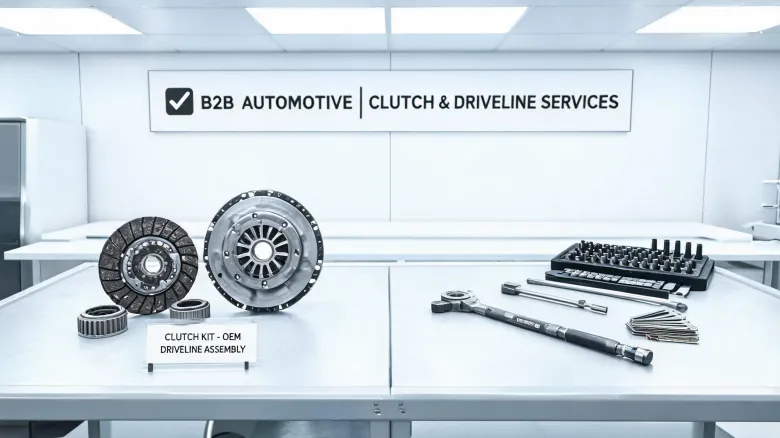
When a car comes in with clutch slip or a pedal that engages near the floor, the first instinct is to blame the friction disc. On a 350Z, the popular answer is a 350Z Exedy clutch kit. Exedy makes strong OE-style kits, and the pressure plates hold up well on street cars. I'm not here to talk you out of buying one. I'm here to tell you to check the hydraulics first.
Three checks before you order:
- Fluid level and smell. Burnt, dark fluid usually means the master cylinder or slave cylinder is dying.
- Flexible clutch hose condition. These can collapse internally and keep the clutch partially engaged, causing a permanent slip feeling.
- Pedal adjustments. If someone installed an aftermarket clutch pedal adjuster, the engagement point can be wrong even with a brand-new kit.
The counterintuitive part: a brand-new Exedy pressure plate won't hold correctly if the hydraulic circuit is full of debris or air. It just wears out in an unpredictable way. So when a customer asks for performance clutch parts, we ask about the hydraulic system first. Usually, fixing that fixes the complaint.
Alternator: Check the Circuit Before the Part
People type 'alternator repairs near me' because they have a battery light on and no idea where to start. I get it. But like the clutch case, the charging system has several suspects before the alternator itself.
Run a 10-minute electrical test before ordering. Resting battery voltage should be about 12.6V. With the engine running at idle, alternator output should be roughly 13.8–14.8V. If it's below that, measure the voltage drop from the alternator's B+ output terminal to the battery positive terminal. A drop of more than 0.3V means the wiring, ground cable, or a connection is the real problem. Fix the cable and re-test before you spend money on a new alternator.
We've also seen alternators fail because the overrunning pulley on the front of the alternator was sticking. That's a smaller repair than a full alternator swap, but you won't catch it unless you listen to the front of the engine during a cold start or spin the pulley by hand with the belt off.
Blown Head Gasket: How to Tell, What to Check First
This is the one that gets quoted as a $2,500 job too often. White steam from the exhaust, coolant loss, or milky oil gets labeled as a blown head gasket, and the customer panics. But in many cases, the real cause is cheaper and much less scary: a bad radiator cap, a leaking thermostat housing, or a heater core leak that drips coolant onto the exhaust.
Simplest checks for a real head gasket failure:
- Look for bubbles in the coolant while the engine idles, especially bubbles that increase when someone revs it slightly.
- Use a combustion leak tester. The blue fluid turns yellow if exhaust gas is entering the cooling system.
- Do a compression test. The numbers should be within about 10% of each other across cylinders. One low cylinder points to a mechanical issue, but that doesn't automatically mean the rings or pistons are bad. A tight or burned valve can produce the same result.
And yes, the same logic applies when a machine shop asks us about a Detroit piston lineup for a diesel rebuild. Once you see low compression, ordering pistons seems natural. But if you skip the bore measurement and valve inspection, you can buy an entire set of parts that don't match the block. We always hold the order until the block is measured. A piston lineup is only as good as the measurement that backs it up.
When This Approach Falls Apart
It's fair to ask where this checklist doesn't help. I can only speak to typical repair work: street-driven vehicles, OEM-grade parts, and worn components that show up in predictable patterns. If you're building a track-only 350Z with a race clutch, or working on a Detroit Diesel engine with a million hard miles, the calculus might be different. Race cars can hide issues because everything is already stressed. High-mileage engines often have overlapping faults that don't show up in one simple test.
Honestly, I'm not fully sure why a small number of vehicles still eat pressure plates even when the hydraulics are perfect. Maybe it's torque harmonics, maybe it's driving style, maybe something else entirely. What I do know: spending ten extra minutes verifying before ordering has never cost us a customer. An informed customer asks better questions, makes faster decisions, and doesn't call back three weeks later with the same complaint.